Tuesday, May 7, 2024
documentary film, 100 years after Kanto (earthquake and Korean) massacre
Tuesday, January 2, 2024
Korean literature in the 20th century - NEH Magazine article
Russian literature shaped the development of Korean culture after being translated into Japanese
by Steve Moyer
HUMANITIES, Winter 2024, Volume 45, Number 1
This article is available for unedited republication, free of charge, using the following credit: "Originally published as "What Is a Relay Language?" in the Winter 2024 issue of Humanities magazine, a publication of the National Endowment for the Humanities." Please notify us at publications@neh.gov if you are republishing it or have any questions.
Thursday, December 14, 2023
collective mourning from Seoul crowd crush in 2022 Itaewon
Saturday, November 25, 2023
book, After the Korean War
Tuesday, November 15, 2022
documentaries - Korea focus
2022 David Plath Media Award – 206 Unearthed
dir. Chul-nyung Heo
2020 David Plath Media Award – Untold (기억의 전쟁)
Bora Lee-Kil (2018, documentary, color, 79 minutes)
Synopsis (adapted from the film's website):
Untold is a story about "warring memories" surrounding a civilian massacre during the Vietnam War. In the 1960s, South Korea fought in the Vietnam War as an ally of the United States. Korean soldiers conducted operations to root out communist insurgents, which led to the killing of large numbers of civilians. According to South Korea's official history, the Vietnam War enable Korea to achieve rapid economic growth. The Vietnamese survivors' experiences have gone largely unacknowledged and the massacre treated as if it never occurred. In central Vietnam, people continue to live with the memory of this brutal and horrifying event. Every February, villagers offer prayers and burn incense in various locations to console the victims in a ceremony called, "Dai Han (Korea) Commemoration."
From the jury:
Untold is a powerful documentary that intimately explores a lesser-known part of the Vietnam War: the massacre of Vietnamese civilians at the hands of South Korean soldiers. With its compelling storyline, the film skillfully conveys the deep emotional trauma of the 1968 massacre without allowing the tragedy to become a gratuitous object of the cinematic gaze. The film is visually rich and ethnographically oriented, paying particular attention to the texture of individual lives, detailed personal narratives, and the important role of ritual in remembrance practices. Untold deepens our understanding of the global Cold War, its legacy, and the interlinkages between East Asian, Southeast Asian, and American neocolonialism/imperialism from a distinctly inter-Asian perspective. It will be an important resource for instructors teaching about Asia, civil society, and the politics of memory.
Monday, August 30, 2021
The Premodern Korea Lecture Series 2021-22
Michael Pettid (Binghamton University)
One Woman's Take on Life in Chosŏn Korea
September 27, 2021, 10 AM EST.
Kanghan Lee (Academy of Korean Studies)
A Unique Relationship: Koryŏ and the Mongol Yuan Empire
November 17, 2021, 7 PM EST/9 AM KST.
Ross King (University of British Columbia)
Did Ch'usa Kim Chŏnghŭi Really Translate Xixiangji into Korean?
Literary Fame, Manuscript Culture, and the Story of the Western Wing in Chosŏn Korea
January 26, 2022, 1 PM EST.
Marjorie Burge (University of Colorado Boulder)
Inscribing the Realm: Early Silla Written Culture Through Mokkan
February 23, 2022, 10 AM EST.
The GW Institute for Korean Studies (GWIKS), a university wide Institute housed in the Elliott School of International Affairs at the George Washington University was founded in 2016. The establishment of the GWIKS was made possible by a generous grant from the Academy of Korean Studies (AKS). The mission of GWIKS is to consolidate, strengthen, and grow the existing Korean studies program at GW, and more generally in the greater D.C. area and beyond. The Institute enables and enhances productive research and education relationships within GW, and among the many experts throughout the region and the world.
Monday, December 21, 2020
DPRK views (online albums 12/2018)
Wednesday, November 18, 2020
Glimpses of wartime Korea from 1950-53
Saturday, May 16, 2020
documentary, "Have Fun in Pyongyang"
This film was shot over a period of eight years by three different people who between them made more than forty trips to North Korea. However, we are not presented with prison camps, or rocket launch pads as that is forbidden. Instead, Have Fun in Pyongyang examines what daily life is like for the 25 million North Koreans who live there. Are they allowed to laugh, dance, and marry? What do they eat? Where do they go on holiday? Due to the countries isolation, these simple questions are quite difficult to answer.
Having attended festivals, harvest ceremonies, visiting factories, and listened to singing contests, we through their camera lenses catch a fascinating and bizarre glimpse of everyday life inside The Hermit Kingdom.
Directed by: Pierre-Olivier Francois
Friday, March 6, 2020
newsletter treasure trove of events, topics, names and opportunities
Monday, February 10, 2020
Subtitles from Korean fails here and there - "Parasite" movie viewing
Parasite has been acclaimed as a strong critique of the stratification created by capitalism and class. It’s now up for six Academy Awards, including Best Picture. But to me, the film’s critique is nothing new. The Korean language and culture embody class stratification, and I was frustrated because I wanted everyone to recognize the ubiquitous nature of the class stratification that happens every day, in every conversation, which isn’t apparent in the subtitles. This ability to navigate the language, even for an immigrant turned naturalized citizen like me, is how you keep in touch with culture. Perhaps this is where translation fails, with the nuances of emotional understanding...
Tuesday, October 22, 2019
Thursday, October 17, 2019
Nagoya’s censored art exhibition and the “comfort women” controversy
Freedom Fighting: Nagoya's censored art exhibition and the "comfort women" controversy |
| An exhibition of censored artwork in Nagoya city triggers a furious debate on artistic expression. The artistic director of the Aichi Triennale 2019 had few illusions when he planned an exhibition called "After Freedom of Expression". By choosing items that poked painfully at some of Japan's most tender spots - war crimes, subservience to America and the status of the imperial family - Tsuda Daisuke wanted to "provoke discussion" on the health of freedom of expression in the country. But what followed, he says, was "beyond our expectations". ... FULL TEXT of this article online, https://apjjf.org/2019/20/McNeill.html
Tuesday, September 10, 2019setting Kayageum to rock music - Interpretations by Luna Lee in 2019 and 2017: Jimi Hendrix cover of "Voodoo Child," https://boingboing.net/2019/09/09/watch-this-amazing-jimi-hendri.html David Bowie's "The Man Who Sold the World," https://boingboing.net/2017/04/11/bowies-the-man-who-sold-th.html
Thursday, May 16, 2019documentary 2019 - Korean War in memoryFeature story in NEH (national endowment for the humanities) magazine, https://www.neh.gov/article/korea-and-thirty-eighth-parallel With link to April 29, 2019 PBS broadcast of the memories and legacies of the Korean War years, 1950-53. Entitled" Korea: The Never-Ending War, at nearly two hours long and produced by WETA, [the film] helps us understand why a divided Korea is still with us." PBS link, https://www.pbs.org/weta/korea-never-ending-war/
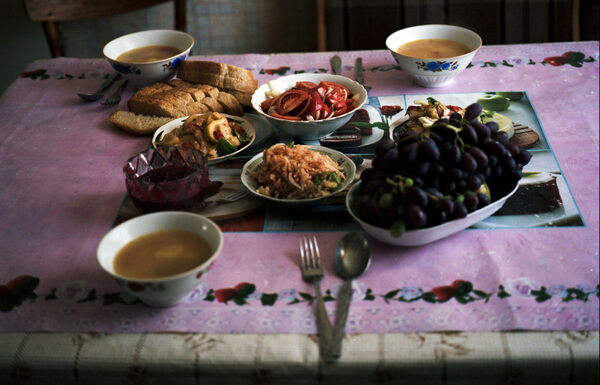
Wednesday, January 23, 2019about Zainichi Koreans living in Japan for generations (new book announced)cross-posted from H-Japan with permission of the author, Jackie Kim-Wachutka. https://networks.h-net.org/node/20904/discussions/3580589/new-book-announce= ment-zainichi-korean-women-japan-voices excerpt, Featuring in-depth interviews from 1994 to the present, three generations of Zainichi Korean women-- those who migrated from colonial Korea before or during WWII and the Asia-Pacific War-- and their Japan-born descendants share their version of history, revealing their lives as members of an ethnic minority. Discovering voices within constricting patriarchal traditions, the women in this book are now able to tell their history. Ethnography, interviews, and the women's personal and creative writings offer an in-depth look into their intergenerational dynamics and provide a new way of exploring the hidden inner world of migrant women and the different ways displacement affects subsequent generations. Wednesday, October 24, 2018food of Koryo Saram, USSR experiences and Kazakhstan from 1937 onwardThe article at AtlasObscura about food customs brought to Kazakhstan after the 1937 transport of people from Korea to Central Asia is detailed and eye-opening for many readers. This sad chapter of forcible uprooting is told at length in David Chung's 2007 documentary, Koryo Saram: The Unreliable People. Article about foodways,https://www.atlasobscura.com/articles/korean-fusion-food-koryo-saram
Thursday, October 4, 2018literature of Korea in translation Digital library of written works made available, courtesy of the Literary Translation Institute of Korea, https://www.ltikorea.or.kr/en/ Sunday, April 22, 2018recap - complicated KR and US relationshipfeatured segment on National Public Radio, April 22, 2018 https://www.npr.org/2018/04/22/604702036/the-complicated-history-of-the-u-s-and-the-korean-peninsula
Sunday, April 8, 2018electronic reference librarian (service)The *Ask a Korean Studies Librarian!* service is provided by the Korean Collections Consortium of North America (KCCNA).
This free reference service is for colleagues, scholars, and students who do not have access to a Korean subject specialist at their own institutions. Send reference inquiries regarding Korea Studies in English or Korean language to *<askkorea@kccna. libsanswers.com>
Subscribe to:
Posts (Atom)
|