featured segment on National Public Radio, April 22, 2018
https://www.npr.org/2018/04/22/604702036/the-complicated-history-of-the-u-s-and-the-korean-peninsula
featured segment on National Public Radio, April 22, 2018
https://www.npr.org/2018/04/22/604702036/the-complicated-history-of-the-u-s-and-the-korean-peninsula
https://www.atlasobscura.com/foods/makgeolli-south-korea
cf. the English language listing on wikipedia, https://en.wikipedia.org/wiki/Makgeolli, or the Korean language one, https://ko.wikipedia.org/wiki/%EB%A7%89%EA%B1%B8%EB%A6%AC
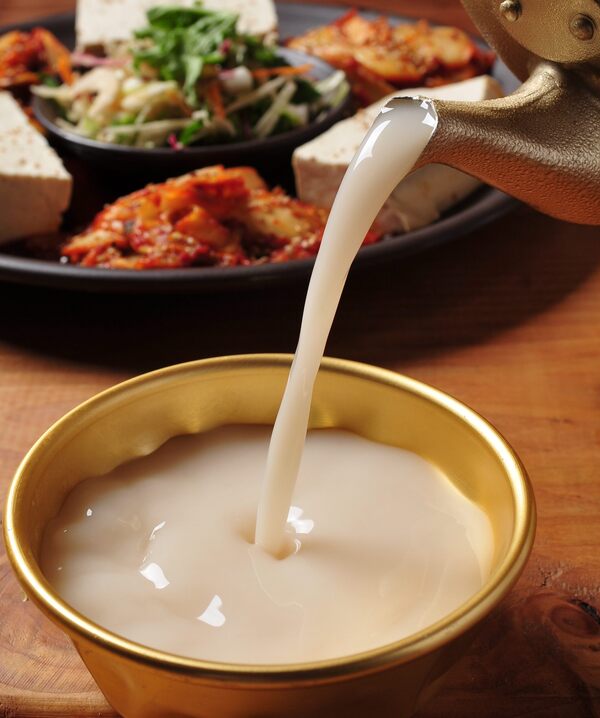 | www.atlasobscura.com Once known as "farmer's alcohol," makgeolli has gained new fans in Seoul and beyond. | |
Extended story of family kimchi-makers, https://www.atlasobscura.com/articles/kiddie-pools-kimchi-kimjang-south-korea-family-cabbage
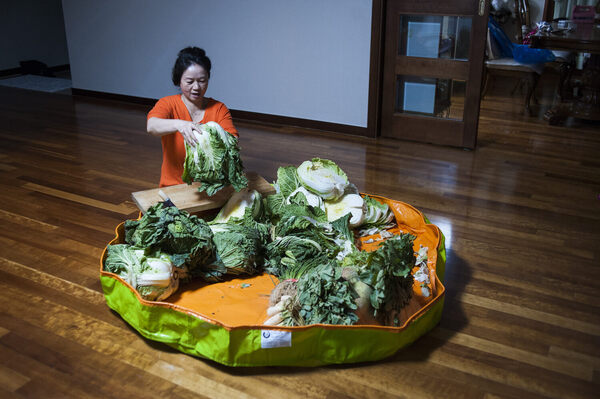 | www.atlasobscura.com For most Koreans," says Yena Lee, of the South Korean Cultural Heritage Administration, "real kimchi is homemade kimchi, preferably made by their mothers." When ... | |
---[Pr. David Plath writes, 6/2017]
So Long Asleep (60 minutes) follows an international team of East Asian volunteers as they excavate, preserve and repatriate the remains of Korean men who died doing slave labor in Hokkaido during the Asia-Pacific War. On the 70th anniversary of the end of the war we travel with them as they carry 115 sets of remains on a pilgrimage across Japan and over to Korea for reinterment in the Seoul Municipal Cemetery. Using a dark past to shape a brighter shared future the project offers an upbeat model for remembrance and reconciliation that could be adapted widely.
The film and the repatriation project are featured in a 4-page special segment of the Spring 2017 issue of Education About Asia.
See the DER website to view a trailer. Dialogue is in English, Korean and Japanese; in the DER edition the dialogue carries English subtitles. Separately, project participants have prepared editions with subtitles in Korean and in Japanese. For the Korean version, contact Professor Byung-Ho Chung (bhc0606at gmail) and for Japanese contact Professor Song Ki-Chan (kichans at hotmail).
An extended essay by Pr. Chung about the project appears in Asia-Pacific Journal; Japan Focus online magazine, as well, http://apjjf.org/2017/12/Chung.html
 | apjjf.org 1. Excavation. A chance encounter drew me into the work of excavation and repatriation of the remains of Korean forced labor victims in Hokkaido. | |
 | www.npr.org Now in Seoul, North Korean defectors recall life inside one of the world's most secretive regimes, talking of brainwashing, required military service — and the jolt of seeing the outside world. | |
Cross-Currents: East Asian History and Culture Review, a quarterly, open-access online journal, is accepting proposals for photo essays for the September 2016 and March 2017 issues (and beyond).
Photo essays include: 1) 20-40 high-quality images with descriptive captions and complete source information, 2) a curator's statement, and 3) a longer non-peer reviewed essay (8-15 pages) contextualizing the photographs and highlighting their significance for current trends of inquiry in Asian studies. This essay can be written by the curator or by an invited scholar. To view archived Cross-Currents photo essays, please click here.
The photographs should be taken in China, Korea, Japan, or Vietnam. They may be contemporary images taken as part of the curator's research or archival materials. Please consult the Cross-Currents mission statement to determine whether the proposed essay fits within the journal's historical and disciplinary scope. Obtaining copyright permissions for all images is the responsibility of the curator.
Proposals should include: 5-10 sample images (as a single PDF); a one-page description of the theme of the essay and the timeliness/importance of the images to scholars of Asia; a brief bio paragraph about the curator; and complete contact information.
Précis: This article, intended as a companion to the recent documentary Us and Them: Korean Indie Rock in a K-Pop World co-produced by Stephen Epstein and Timothy Tangherlini, situates Korean indie and punk rock within a broader context in order to demonstrate how what may seem a byway within Korean culture serves as a useful index of important recent societal transformations. As the nature of not only global media flows and musical circulation but Korean national identity and economic structures all undergo significant change, how should observers understand "Korean" "indie" music and its meanings as of 2015? How have the local punk and indie scenes developed in concert with, and in contrast to, K-pop?
Key words: South Korea, popular music, indie music, punk, K-pop.
| Multimedia Works on Korean Culture |
| Chang: A Traditional Vocal Misic (Album) |
| Released on six LP stereo recordings in 1986, this is the first recording of all 41 extant Changs (Korean traditional songs) with male and female vocals, which have been passed down from the past to the present. |
| Traditional Korean Culture of Food (Video) |
| This video includes the visual recordings of traditional foods such as Korean biscuits, rice cakes, sweets, alcoholic drinks, kimchi, and sauces, narrated in both Korean and English in each volume. |
| Korean Language Textbooks |
The following textbooks are used for Korean language instruction: Korean (vol. 1-6), Korean Conversation (vol. 1-6), and Standard Pronunciation Practice for Korean.Friday, October 23, 2015journal article - Early Photos, women in Korea*Gendering Modernity: Korean Women Seen through the Early Missionary Gaze, 1880s-1910s, https://cross-currents.berkeley.edu/e-journal/photo-essay/980?page=0
--- Curated by Heejeong Sohn, Stony Brook University Curator's Statement, https://cross-currents.berkeley.edu/e-journal/issue-16/sohn (viewers may leave feedback online) Tuesday, August 4, 2015back to the farm - Koreans' U-turn from city to countryAbout 45,000 households left the city centers in the past year to seek their fortunes or at least more fulfilling lives away from urban places,
http://www.npr.org/sections/thesalt/2015/08/03/428102390/tired-of-the-seoul-sucking-rat-race-koreans-flock-to-farming [excerpt] "At the construction company a lot of the time I'd wake up at 6 in the morning and work all night through to the next day," he says. "That was really hard for me." South Korea has an overwhelmingly urban population. More than 80 percent of people live in cities. But in the past few years, something has started to change. Tens of thousands of South Koreans like Kim Pil-Gi are relocating to the countryside each year. His father, Kim Jin-Suk, left a marketing job in Seoul to start this farm. "In the city you're always running short of time, because you're trying to get rich," he says. "In the countryside, I find that I have more time for myself."
Subscribe to:
Posts (Atom)
|